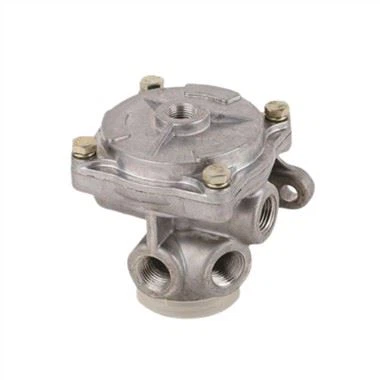
The vacuum brake booster is a crucial component in a vehicle's braking system. It uses the vacuum created by the engine (or in some cases, a separate vacuum pump) to assist the driver in applying the brakes. This assistance makes it much easier to stop the vehicle, especially in emergency situations. When the vacuum brake booster starts to malfunction, several symptoms can arise, all of which are important to recognize for the sake of safety and proper vehicle maintenance.
1. Hard Brake Pedal
One of the most common and noticeable symptoms of a faulty vacuum brake booster is a hard brake pedal. Under normal circumstances, when you press the brake pedal, the vacuum brake booster amplifies the force of your foot, allowing you to apply the brakes with relatively little effort. However, when the booster fails, this amplification no longer occurs. As a result, you'll find that you need to exert significantly more pressure on the brake pedal to achieve the same braking effect. In some cases, the brake pedal may feel almost rock - hard, making it extremely difficult to press down. This not only makes driving more physically demanding but also greatly reduces the effectiveness of the braking system, as you may not be able to apply enough force to stop the vehicle quickly.
2. Increased Stopping Distance
A failing vacuum brake booster often leads to an increased stopping distance. Since the booster is not providing the necessary assistance, the brakes have to rely more on the force you apply with your foot. This means that it takes longer for the brakes to slow down and stop the vehicle. In emergency braking situations, this increased stopping distance can be extremely dangerous, as it may prevent you from avoiding a collision. For example, if you need to stop suddenly to avoid hitting a pedestrian or another vehicle, a faulty vacuum brake booster could cause you to hit the object because your vehicle doesn't come to a halt in time.
3. Hissing Noise
A vacuum - operated brake booster that has a leak in its housing or diaphragm can produce a hissing noise. This noise is typically most noticeable when you apply the brakes. The hissing sound is caused by air escaping from the booster due to the leak. If you hear a hissing noise coming from the area of the brake booster (usually located near the firewall in the engine compartment) when you press the brake pedal, it's a strong indication that there is a problem with the booster. It could be a sign of a damaged diaphragm, a loose connection, or a crack in the housing, all of which can affect the booster's ability to function properly.
4. Fluid Leaks
In the case of hydro - boost brake boosters, which use power steering fluid to provide braking assist, a leak can develop. If you notice fluid dripping under the vehicle near the area of the brake booster or power steering components, it could be a sign of a problem with the hydro - boost unit. Electronic brake booster assemblies that are housed with the master cylinder can also develop leaks. Fluid leaks not only indicate a potential problem with the brake booster but can also lead to a loss of braking performance. As the fluid level drops, the braking system may not be able to function as effectively, and in severe cases, it could lead to a complete loss of braking power.
5. Illuminated Warning Lights
An issue with the electronic brake booster assembly can have an impact on the anti - lock braking system (ABS) operation. When this happens, it can trigger various warning lights on the vehicle's dashboard. For example, the ABS light, traction control light, and stability control light may all illuminate. Additionally, a leaking, vacuum - operated brake booster can cause the engine to run lean, which can trigger the check engine light. These warning lights are the vehicle's way of alerting you to a problem with the braking system or related components. If you see any of these lights come on, it's important to have the vehicle inspected as soon as possible to determine the cause, as a problem with the brake booster can have serious safety implications.
6. Brake Pedal Return Issues
The brake pedal may experience problems with returning to its normal position when the vacuum brake booster is faulty. It could return slowly, or in some cases, not return at all. This is because the normal operation of the booster, which helps to assist in the smooth return of the brake pedal, is disrupted. If the brake pedal doesn't return properly, it can be difficult to apply the brakes again quickly, especially in situations where multiple rapid brake applications are required, such as in stop - and - go traffic or during an emergency.
7. Abnormal Brake Pedal Feel
In addition to feeling hard, the brake pedal may also have an abnormal feel in other ways. It could feel spongy, as if there is air in the braking system, even though there may not be an actual air leak in the lines. This spongy feeling is often a result of the booster not providing the correct amount of assistance, causing the brake pedal to move in an unnatural way. Another abnormal feel could be a lack of modulation. Normally, you should be able to gradually increase or decrease the braking force by modulating the pressure on the brake pedal. With a faulty vacuum brake booster, this modulation may become difficult, and the brakes may seem to engage in a more on - off manner, making it harder to control the vehicle's speed smoothly.
8. Engine - Related Symptoms
A vacuum - leak in the brake booster can cause problems with the engine's performance. Since the booster relies on engine vacuum, a leak can disrupt the normal vacuum levels in the engine. This can lead to the engine stumbling, stalling, or having a rough idle. When you press the brakes, the increased vacuum leak can cause the engine to react negatively, as it may not be getting the correct amount of air - fuel mixture due to the disrupted vacuum. For example, the engine's RPMs may drop suddenly when you apply the brakes, or it may even stall if the vacuum leak is severe enough. This not only affects the driving experience but also indicates a serious problem with the brake booster that needs to be addressed promptly.
In conclusion, a faulty vacuum brake booster can exhibit several symptoms, all of which are related to the braking system's performance and the vehicle's overall operation. Recognizing these symptoms early on is crucial for maintaining the safety of your vehicle and ensuring that you can stop your car effectively in all driving conditions. If you notice any of these symptoms, it's highly recommended that you have your vehicle inspected by a qualified mechanic as soon as possible. The mechanic can perform the necessary tests to determine if the vacuum brake booster is indeed the problem and replace it if needed, restoring your vehicle's braking system to its proper working condition.