


Items: trunnion shaft bushing For Japanese truck trailer,trunnion bushing,spring bushing
Size:80mm,100mm,115mm,125mm
Used for Mitsubishi,Hino,Nissan,Isuzu truck,trailer,

Company Profile
Quanzhou Xinlida Machinery Manufactory Co., Ltd. was founded in 1995, located in the Southeast of China, cultural city called Quanzhou, where the " Silk Road" started. Quanzhou is known as a "garden city", and enjoys a beautiful environment and convenient transportation.
In 2008 passed the ISO9001 international quality management system certification, in 2014 passed ISO/TS16949 quality system. Our market covers countries from Southeast Asia to Middle East Area, Europe, America etc.
Why Choose Us
Our Factory
Xinlida is a professional manufacturer and exporter of Spare Parts for European and Japanese Auto Chassis Parts, such as Clutch Booster, Brake Air Master Booster, Repair Kit, King Pin Kit, Trunnion Seat and so on. The soul of Xinlida is " professionalism, innovation, quality, and dedication", running with modern enterprise management.
Our Certificate
SGS ISO9001, TUV ISO/TS16949
Production Equipment
Eight PCS CNC machines, One Automotive casting Machine, and One Testing Room
Our Product
Clutch Booster, Air Master Booster, Foot Valve, Relay Valve, Power Shift Booster, Servo Pump, Slave Pump, Master Pump, Booster Repair Kit, King Pin Kit, Trunnion Shaft, Trunnion Seat, Propeller Shaft, Trunnion Bush, Trunnion Washer, Tie Rod End, Drag Link End and so on.
-
![Trunnion Shaft Bushing]()
-
![Spring Bushing for Suspension Parts]() Spring Bushing for Suspension PartsItems: spring bushing for suspension partsread more
Spring Bushing for Suspension PartsItems: spring bushing for suspension partsread more
Size:25mm,28mm,30mm,32mm,35mm
Used for Mitsubishi,Hino,Nissan,Isuzu truck,trailer, -
![Trunnion Washer]() Trunnion WasherItems: trunnion washer for suspension partsread more
Trunnion WasherItems: trunnion washer for suspension partsread more
Size:110*100*7mm,thickness 8MM,10MM,12MM
Used for Mitsubishi,Hino,Nissan,Isuzu truck,trailer,


What is Bushing?
A bushing is called by many different terms. It can be referenced as a plain bearing, solid bearing, friction bearing, or slide bearing. They are used in many different industries and machinery. The use of bushing is to reduce the friction, vibration, and noise that machinery might create. Some examples of uses of bushings are in automotive machines, drilling operations, pumps, and motors. Bushings are like thin tubes that improve efficiency on rotating and sliding shafts. High-quality bushings, like self-lubricating bushings, also reduce vibration and operate more quietly.
Benefits of Bushing
Improve the service life of mechanical parts
Bushings can improve the service life of mechanical parts. When mechanical parts are running, friction is inevitable, and bushings can play a role in lubrication and protection, protecting the surface of mechanical parts from loss and wear, thereby extending the service life of mechanical parts.
01
Reduce the failure rate between mechanical parts
Bushings can reduce the failure rate between mechanical parts. Wear and friction are common problems in the operation of mechanical parts. Long-term friction will cause fatigue and oxidation on the surface of mechanical parts, which may cause failure of mechanical parts. Under the protection of bushings, the surface of mechanical parts is not damaged by friction, reducing the probability of failure between mechanical parts.
02
Improve the working efficiency of mechanical parts
Bushings can improve the working efficiency of mechanical parts. Due to the lubrication and protection of bushings, friction is reduced to a certain extent, thereby improving the working efficiency of mechanical parts and reducing the energy consumption of mechanical parts.
03
Protecting Mechanical Parts
The bushing is an important accessory for protecting mechanical parts. Its function is to reduce the friction between mechanical parts, improve the wear resistance of mechanical parts, and thus extend the service life of mechanical parts. At the same time, the bushing can also reduce the probability of failure between mechanical parts and improve the working efficiency of mechanical parts. It is a very practical and economical mechanical parts protection device.
04
Type of Bushing
Rubber Bushings: Softer than polyurethane, allowing it to dampen more vibrations. However, it can wear out when exposed continuously to stretching, heat, oil or chemicals.
Polyurethane Bushings: Firmer than rubber and handle more abrasion, but also require more frequent lubrication. This type of material may be moulded.
Bronze Bushings: Harder and less likely to break or deform than rubber or plastic. About 17 types of bronze are used in making bushings. Two of the most common are oilite, a self-lubricating material, and copper, which is bronze combined with tin, aluminium, or silicone.
Steel-backed/Babbit Bushings: A lower-cost material than bronze, offering excellent fatigue resistance and load-carrying capacity.
Cast-Iron Bushings: Used to support hardened steel shafts.
Neoprene Bushings: Looks and feels like rubber, but can withstand heat better and does not quickly deteriorate when exposed to oil or heat.

Bushing vs Bearing
When making a decision between bushings and bearings, it is important to consider several factors in order of importance:
Velocity and Loading
Determine whether the wheels will carry heavier loads at slower speeds or lighter loads at higher speeds. Bearings are generally more suitable for high-velocity applications, while bushings tend to respond better to low-speed, heavy load scenarios.
01
Smoothness of Operation
Consider the smoothness of operation, as bushings are more likely to experience "stick and slip" issues than bearings.
02
Operating Noise
If minimal operating noise is critical, note that bushings are generally quieter than bearings.
03
Maintenance and Lubrication
Take into account the maintenance and lubrication requirements, particularly in industries such as food and textiles where self-lubrication and low maintenance are favored.
04
Bushing Materials
Bushings can be made from a wide range of materials, each with its own unique properties:
Bronze: Bronze bushings are known for their good resistance to wear and corrosion. They are often used in applications where strength and heavy loads are a factor.
Steel: Steel bushings are known for their high strength and durability. They are often used in high load-bearing applications.
Plastic: Plastic bushings are lightweight and offer good resistance to corrosion and wear. They are often used in applications where weight and corrosion are concerns.
Composite Materials: Composite bushings are made from a mixture of materials to obtain the benefits of each. For example, a bronze bushing might be filled with graphite to make it self-lubricating.

Which bushing material is better?
Rubber - Rubber is softer than polyurethane. So, it will dampen more vibrations. However, it allows more give in the steering and suspension. This makes for a softer ride but sacrifices some responsiveness.
Rubber will also wear out. Over time, rubber can be damaged by stretching, heat, oil, and road chemicals. Replacing a rubber bushing can also require special tools like a press.
Polyurethane - Polyurethane is firmer than rubber. It will transfer more noise and vibration to the cab of the vehicle. However, it provides a better feel of the road. It also makes the steering and suspension more responsive.
With proper care, polyurethane bushings can last the lifetime of the vehicle. The bushings will need to be re-greased every few years. Without proper lubrication, the bushings can wear, squeak, and bind
Application of Bushing
Bushings are accessories used outside mechanical parts to achieve sealing, wear protection and other functions. They refer to rings that act as gaskets. In the field of valve applications, bushings are inside the valve cover and are generally made of corrosion-resistant materials such as polytetrafluoroethylene or graphite for sealing.
In moving parts, due to long-term friction, parts wear. When the gap between the shaft and the hole wears to a certain extent, the parts must be replaced. Therefore, when designing, designers choose materials with lower hardness and better wear resistance as sleeves or bushings, which can reduce the wear of the shaft and seat. When the sleeve or bushing is worn to a certain extent, it can be replaced, which can save the cost of replacing the shaft or seat.
Generally speaking, the bushing and the seat adopt interference fit, while the shaft adopts clearance fit, because wear cannot be avoided anyway, and the service life can only be extended, while shaft parts are relatively easy to process; some new designers do not like this design, thinking that it will increase the cost during manufacturing, but after a period of use, it is still necessary to modify it in this way during maintenance, but the modification is likely to reduce the accuracy of the equipment. The reason is very simple. Secondary processing cannot guarantee the position of the center of the seat hole. In some places with low speed, high radial load and high clearance requirements (such as camshafts), the sleeve is used to replace rolling bearings (in fact, the sleeve is also a kind of sliding bearing). The material requires low hardness and wear resistance. The inner hole of the sleeve can achieve high matching accuracy after grinding and scraping. There must be an oil groove for lubricating oil on the inner wall. The lubrication of the sleeve is very important. If it is dry ground, the shaft and sleeve will soon be scrapped. It is recommended to scrape the inner hole wall of the sleeve during installation, so that many small pits can be left to enhance lubrication. The bushing and sleeve are selected according to different industrial and mining conditions. Different models are selected. Wrap the valve stem, and it can be easily replaced if it is worn. If the bushing is not used, the parts are replaced after wear. So the bushing is replaced (when designing, the bushing hardness is reduced to make it a wear-bearing part in the friction pair). Because it is easy to process, the replacement cost is low, and it is also easy to replace. Of course, there are also guiding functions, which are secondary.
Bushing Manufacturing Process
The manufacturing process of bushings may vary depending on the material used and the specific application for which the bushing is being made.
Design: The process starts with designing the bushing according to the requirements of the specific application. The design process involves defining the dimensions, selecting the material, and creating a blueprint of the bushing.
Material Selection: Based on the application, different materials can be selected. These materials include bronze, brass, copper, steel, or plastic. For self-lubricating bushings, materials such as bronze or steel are often impregnated with lubricants like graphite or PTFE.
Cutting and Shaping: The selected material is cut and shaped into the designed form. This can be done through various methods such as casting (for metals), injection molding (for plastics), or machining (for both metals and plastics).
Finishing: The cut and shaped bushings are then finished. This involves smoothing the surfaces, removing any burrs, and often applying a surface treatment such as plating, painting, or coating to increase corrosion resistance and improve wear properties.
Quality Control: Finally, the finished bushings are inspected and tested to ensure they meet the specified quality standards. This often involves measuring the dimensions, checking the surface finish, and testing the material properties.
Working Principle of Bushing
The bushing is made of wear-resistant material and rubs against the surface in contact with it. The bushing is generally a soft material, which has a certain degree of avoidance and wear during friction. As mentioned above, the bushing uses the surface in contact with it to wear the bushing and protect the surface in contact with it. It is replaced after the wear reaches a certain degree.
1. Properties of contact materials: Including surface roughness, hardness, and properties of the material itself.
2. Working environment of bushing: Load, temperature, movement speed, etc.
The life and wear resistance of the bushing are relative, not only depending on the bushing itself, but also on the properties of the material in contact with the bushing. No matter how good the bushing material is, if the material in contact with it has a very low hardness and a very rough surface, it is easy to wear out. In addition, bushings are generally used at low speeds. After all, it is sliding friction. Unless the load is very small, too high a speed will generate a lot of heat.


Our Factory
Xinlida is a professional manufacturer and exporter of Spare Parts for European and Japanese Auto Chassis Parts, such as Clutch Booster, Brake Air Master Booster, Repair Kit, King Pin Kit, Trunnion Seat and so on. The soul of Xinlida is " professionalism, innovation, quality, and dedication", running with modern enterprise management. In 2008 passed the ISO9001 international quality management system certification, in 2014 passed ISO/TS16949 quality system. Our market covers countries from Southeast Asia to Middle East Area, Europe, America etc.
FAQ
As one of the leading bushing manufacturers and suppliers in China for over 25 years, we warmly welcome you to buy high quality bushing at competitive price from our factory. For more information, contact us now.
Trunnion Shaft Bushing, Spring Bushing for Suspension Parts, Trunnion WasherPopular Products
-
![Air Master Booster]() Air Master BoosterItems: air master boosterread more
Air Master BoosterItems: air master boosterread more
Size:114mm,138mm
Used for Mitsubishi truck,trailer, -
![Clutch Booster Assy]() Clutch Booster AssyItems: clutch booster assemblyread more
Clutch Booster AssyItems: clutch booster assemblyread more
Size:70mm,90mm,90mm long,105mm,105mm long,3”4.2”4.5”5”,M14,M16 3/8... -
![Vacuum Brake Booster]()
-
![Foot Brake Valve]() Foot Brake ValveItems: 241-02903,241-02904read more
Foot Brake ValveItems: 241-02903,241-02904read more
Size:90,180,INPUT=8,OUTPUT=10
Used for Hino, Mitsubishi,Isuzu,Nissan... -
![Power Shift Booster]() Power Shift BoosterItems: 654-01006,ME670046read more
Power Shift BoosterItems: 654-01006,ME670046read more
Size:LH RH,28mm,30mm,50mm,55mm,60mm,64/81/62mm
Used for heavy... -
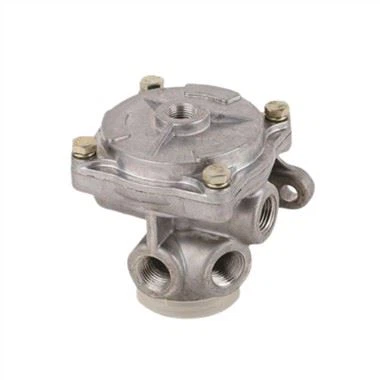
![Relay Valve for Air Master]() Relay Valve for Air MasterItems: Relay Valve for air master booster,relay valve for trailerread more
Relay Valve for Air MasterItems: Relay Valve for air master booster,relay valve for trailerread more
Size:138,universal used
Used for Air...


Send Inquiry