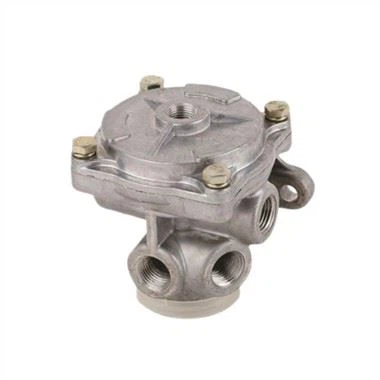
Brake boosters, also known as brake assist systems, are essential components in modern vehicle braking systems-and they do work fundamentally to enhance braking efficiency and driver control. Here's a detailed explanation of their function, types, and operational principles:
### 1. Core Purpose of a Brake Booster
The primary role of a brake booster is to amplify the force applied by the driver's foot on the brake pedal, making it easier to apply sufficient pressure to stop the vehicle. Without a booster, drivers would need to exert significantly more physical effort, especially in larger vehicles or those with hydraulic braking systems.
### 2. How Different Types of Brake Boosters Work
2.1 Vacuum Brake Boosters (Most Common in Passenger Cars)
Power Source: Engine vacuum (created by the engine's intake manifold, typically -20 inHg to ~5 PSI).
Mechanism:
Resting State: A diaphragm inside the booster separates two chambers, both under vacuum.
Braking Activation: When the brake pedal is pressed, a valve opens, allowing atmospheric pressure into one chamber while the other remains under vacuum. The pressure difference (atmosphere vs. vacuum) pushes the diaphragm, amplifying the force applied to the brake master cylinder.
Amplification Ratio: Typically 5–10x (e.g., 50 lbs of foot pressure becomes 250–500 lbs of force on the master cylinder).
2.2 Air Brake Boosters (Heavy-Duty Vehicles)
Power Source: Compressed air (100–150 PSI from an onboard air compressor).
Mechanism:
Compressed air from a reservoir is directed to a power piston or diaphragm when the brake pedal is pressed. The air pressure pushes the piston, transmitting amplified force to the brake system (either hydraulic or pneumatic).
Amplification Ratio: Higher than vacuum boosters (10–20x), suitable for stopping heavy loads like trucks or buses.
2.3 Hydro-Boost (Hydraulic Boosters, in Some Trucks/Diesels)
Power Source: Hydraulic pressure from the power steering pump (1,000–1,500 PSI).
Mechanism:
A hydraulic piston uses pressure from the steering pump to assist the brake pedal force. This is common in vehicles where engine vacuum is insufficient (e.g., diesel engines) or for added braking power.
### 3. Real-World Example: Vacuum Booster in a Passenger Car
Driver Input: Pressing the brake pedal with ~50 lbs of force.
Booster Action: The vacuum booster multiplies this to ~300–500 lbs of force on the master cylinder.
Result: Hydraulic fluid is pushed to the brake calipers/drums, generating enough friction to stop a 3,000-lb car within safe distances.
### 4. Signs a Brake Booster Might Be Failing
While brake boosters are reliable, failures can occur. Symptoms include:
Stiff Brake Pedal: Requiring excessive force to press, indicating reduced amplification.
Spongy or Sinking Pedal: A sign of vacuum leaks or hydraulic issues.
Hissing Noise When Pressing the Pedal: Indicates a vacuum leak in the booster or hose.
Reduced Braking Efficiency: Longer stopping distances despite normal pedal pressure.
### 5. Safety and Redundancy
Fail-Safe Design: Most boosters are designed so that if they fail, the brakes still work-though with much more driver effort (i.e., the booster is an "assist" but not essential for basic braking).
Dual Systems in Heavy Vehicles: Air brake boosters often use dual air reservoirs for redundancy, ensuring braking even if one system fails.
### 6. Why Brake Boosters Are Essential
Ergonomics: Allow drivers to apply brakes without excessive physical strain.
Safety: Enable quicker and more consistent braking, especially in emergency situations.
Efficiency: Convert minimal foot force into high hydraulic/pneumatic pressure, optimizing brake performance.