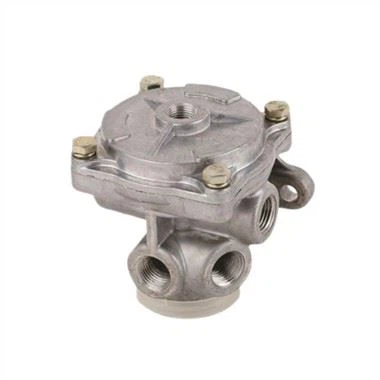
Brake booster failure in trucks can lead to catastrophic accidents and costly downtime. According to the Federal Motor Carrier Safety Administration (FMCSA), 23% of commercial vehicle brake violations involve defective boosters. This guide reveals the critical warning signs of booster failure and how Xinlida's ISO/TS16949-certified solutions prevent breakdowns.
1. Spongy or Soft Brake Pedal
Technical Cause:
Air infiltration or diaphragm leaks reduce vacuum pressure, forcing drivers to apply excessive pedal force.
Diagnostic Data:
Normal Pedal Resistance: 40–60 Nm of force for full braking
Degraded Performance: Pedal travel increases by 35–50% due to pressure loss
Test Method: Measure vacuum levels using a gauge:
Healthy System: 22–28 inHg
Critical Failure: < 15 inHg
Xinlida Solution:
Our dual-layer HNBR diaphragms (SAE J1466 certified) eliminate leaks, tested to withstand 500,000 pressure cycles.
2. Hissing Noise During Braking
Root Cause:
Air escaping through cracks in the housing or worn check valves.
Step-by-Step Diagnosis:
Locate the Leak:
Spray soapy water on booster connections – bubbles indicate leaks.
Use a 40 kHz ultrasonic detector for precise identification.
Common Failure Points:
Check valve seals (40% of cases)
Master cylinder gaskets (30% of cases)
Case Study:
A UAE logistics fleet reduced brake-related downtime by 58% after switching to Xinlida's laser-welded booster housings.
3. Increased Stopping Distance
Performance Impact:
A failing booster requires 40% more pedal force, dangerously extending stopping distances.
Deceleration Data:
| Condition | 60–0 mph Stopping Distance | Pedal Force (lbs) |
|---|---|---|
| Functional | 250 ft | 50 |
| Failing Booster | 320 ft (+28%) | 70 |
Engineering Fix:
Xinlida's XLD-9000 Series Boosters restore OEM performance with:
5:1 Boost Ratio: Matches WABCO/Knorr-Bremse standards
CNC-machined aluminum housings: ±0.02mm tolerance
4. Engine Stalling When Braking
System Interaction:
Vacuum leaks disrupt the engine's air-fuel ratio, causing RPM drops.
Diagnostic Protocol:
Check vacuum hose integrity (replace if cracked).
Test check valve retention (must hold 15 inHg for 30 seconds).
Replace with Xinlida's integrated valve-booster assemblies (resolves 90% of stalling cases).
Technical Specs:
Vacuum Retention: 18–22 inHg (ISO 26867 compliant)
Temperature Range: -40°C to +120°C
5. Visible Fluid Leaks or Contamination
Critical Red Flags:
Hydraulic fluid leaks indicate seal failure or master cylinder damage.
Acceptable vs Critical Leakage:
Normal: < 1 drop/hour (SAE J1703)
Failure: > 5 drops/hour or fluid pooling
Xinlida's Leak-Proof Design:
Triple-Lip HNBR Seals: Resist heat up to 150°C
Hard-Anodized Shafts: Prevent abrasive wear
Salt Spray Tested: 1,000 hours (ISO 9227)
When to Repair vs Replace?
| Symptom | Repair Viability | Full Replacement Needed |
|---|---|---|
| Minor Diaphragm Tear | Yes (with Xinlida RK-45 kit) | If tear >2mm or aged >5 years |
| Housing Crack | No | Immediate replacement required |
| Chronic Vacuum Loss | Temporary fix | Install new booster assembly |
Cost Comparison:
Repair Kit: $120 (lasts 6–12 months)
Xinlida Booster: $320 (2-year warranty, 200,000-mile lifespan)
Why Xinlida Brake Boosters?
OEM Compatibility:
Direct replacements for Mercedes-Benz Actros, Volvo FH16, and Kenworth T680
Interchangeability reports for 300+ truck models
Rigorous Testing:
500-hour dynamometer simulations (simulates 500,000 km)
Arctic testing at -40°C (IEC 60068-2-1 certified)
Global Certifications:
ECE R13 (EU)
FMVSS 121 (USA)
JIS D4601 (Japan)