


As a supplier of Slave Pumps, I've encountered numerous inquiries from customers regarding the issue of high starting currents in these pumps. High starting currents can lead to a variety of problems, such as excessive stress on the electrical system, potential damage to the pump motor, and increased energy consumption. In this blog post, I'll share some effective strategies on how to reduce the starting current of a slave pump.
Understanding the Problem of High Starting Current
Before delving into the solutions, it's essential to understand why slave pumps often experience high starting currents. When a pump starts, the motor needs to overcome the inertia of the stationary components and the load resistance. This requires a significant amount of electrical power, resulting in a high inrush current. The magnitude of the starting current can be several times higher than the normal operating current of the pump.
Strategies to Reduce Starting Current
1. Soft Starters
Soft starters are one of the most commonly used methods to reduce the starting current of electric motors, including those in slave pumps. A soft starter gradually increases the voltage supplied to the motor during startup, which in turn reduces the starting torque and current. By controlling the voltage ramp-up rate, the soft starter allows the motor to reach its operating speed smoothly without drawing excessive current.
There are different types of soft starters available in the market, such as thyristor-based soft starters and solid-state soft starters. Thyristor-based soft starters are cost - effective and widely used. They work by controlling the firing angle of the thyristors to regulate the voltage applied to the motor. Solid - state soft starters, on the other hand, offer more advanced features and better performance, but they are generally more expensive.
2. Variable Frequency Drives (VFDs)
Variable Frequency Drives are another excellent option for reducing the starting current of slave pumps. A VFD adjusts the frequency and voltage supplied to the motor, allowing it to start and operate at different speeds. During startup, the VFD can gradually increase the frequency and voltage, enabling the motor to start smoothly with a reduced starting current.
In addition to reducing the starting current, VFDs also offer other benefits. They can improve the energy efficiency of the pump by adjusting the motor speed according to the actual load requirements. This means that the pump can consume less energy when the demand is low, resulting in significant cost savings over time.
3. Star - Delta Starters
Star - Delta starters are a traditional but effective method for reducing the starting current of three - phase motors. In a star - delta starter, the motor is initially connected in a star configuration during startup. In the star connection, the voltage across each phase of the motor is reduced to 1/√3 (approximately 57.7%) of the line voltage. This reduction in voltage leads to a proportional reduction in the starting current.
Once the motor reaches a certain speed, the starter switches the motor connection from star to delta. In the delta connection, the motor operates at its normal voltage and full power. Star - delta starters are relatively simple and cost - effective, but they are mainly suitable for applications where the motor can tolerate a relatively high starting torque.
4. Reducing the Load at Startup
Another way to reduce the starting current of a slave pump is to reduce the load on the pump during startup. This can be achieved by closing the discharge valve partially or completely before starting the pump. By reducing the flow resistance, the pump motor has to work less to overcome the load, resulting in a lower starting current.
Once the pump has reached its operating speed, the discharge valve can be gradually opened to allow the normal flow of fluid. However, it's important to note that this method may not be suitable for all types of pumps, especially those that are sensitive to low - flow conditions.
Case Studies and Real - World Applications
Let's take a look at some real - world examples of how these methods have been applied to reduce the starting current of slave pumps.
In a large industrial plant, a company was experiencing problems with high starting currents in their slave pumps. They decided to install soft starters on the pump motors. After the installation, the starting current was reduced by approximately 50%, which not only reduced the stress on the electrical system but also extended the lifespan of the motors.
In another case, a water treatment facility installed Variable Frequency Drives on their slave pumps. By adjusting the motor speed according to the water demand, they were able to reduce the starting current and achieve significant energy savings. The VFDs also provided better control over the pump operation, resulting in more stable water flow.
Related Products and Their Roles
As a Slave Pump supplier, we also offer related products that can complement the efforts to reduce starting current. For example, Brake Vacuum Booster Pump is an important component in many automotive and industrial applications. It can work in conjunction with the slave pump to ensure proper system operation. The Air Master Brake Booster also plays a crucial role in providing additional force when needed. And the Brake Booster Actuator helps in the precise control of the braking system.
Conclusion
Reducing the starting current of a slave pump is crucial for ensuring the reliable operation of the pump and the electrical system. By using methods such as soft starters, variable frequency drives, star - delta starters, and reducing the load at startup, we can effectively lower the starting current and enjoy the benefits of reduced energy consumption, extended motor lifespan, and improved system stability.
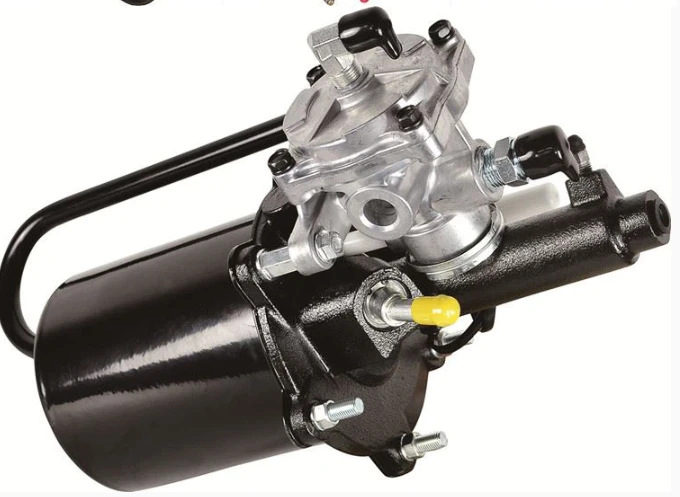

If you are facing issues with high starting currents in your slave pumps or are interested in learning more about our products and solutions, I encourage you to reach out to us for a detailed discussion. Our team of experts is ready to assist you in finding the most suitable solution for your specific needs.
References
- "Electric Motor Handbook", by Arnold E. Fitzgerald, Charles Kingsley Jr., and Stephen D. Umans.
- "Pump Handbook", by Igor J. Karassik, Joseph P. Messina, Paul Cooper, and Charles C. Heald.
- Technical literature from various soft starter, VFD, and motor manufacturer websites.


