


Trunnion washers are essential components in various mechanical systems, offering support and reducing friction between moving parts. As a trusted Trunnion Washer supplier, I often encounter inquiries about their suitability for marine applications. In this blog post, we'll explore the feasibility of using trunnion washers in marine environments, considering factors such as corrosion resistance, load capacity, and material compatibility.
Understanding Trunnion Washers
Before delving into their marine applications, let's first understand what trunnion washers are. Trunnion washers are flat, circular discs with a central hole, designed to be placed between two mating surfaces to distribute loads evenly and reduce friction. They are commonly used in conjunction with trunnion shafts or pins to provide support and alignment in a variety of mechanical systems, including automotive, industrial, and aerospace applications.
Trunnion washers come in a range of sizes, materials, and designs to suit different applications. Some common materials used for trunnion washers include steel, stainless steel, bronze, and plastic. The choice of material depends on factors such as the load requirements, operating environment, and desired level of corrosion resistance.
Marine Environments: Challenges and Requirements
Marine environments present unique challenges for mechanical components due to the presence of saltwater, high humidity, and extreme temperatures. These conditions can accelerate corrosion, reduce the lifespan of components, and compromise their performance. Therefore, any component used in marine applications must be able to withstand these harsh conditions and maintain its integrity over time.
In addition to corrosion resistance, marine components must also have sufficient load capacity to handle the dynamic forces and stresses encountered in marine operations. This includes the weight of the vessel, the forces generated by waves and currents, and the loads imposed by equipment and machinery on board.
Can Trunnion Washers Be Used in Marine Applications?
The answer to this question depends on several factors, including the material of the trunnion washer, its design, and the specific requirements of the marine application. Let's take a closer look at these factors:
Material Selection
One of the most critical factors in determining the suitability of trunnion washers for marine applications is the material used. As mentioned earlier, marine environments are highly corrosive, so the material must have excellent corrosion resistance to prevent rust and degradation.
Stainless steel is a popular choice for marine applications due to its high corrosion resistance and durability. It contains chromium, which forms a protective oxide layer on the surface of the material, preventing the penetration of oxygen and moisture. Other materials that can be used in marine applications include bronze, which has good corrosion resistance and self-lubricating properties, and plastic, which is lightweight and resistant to corrosion.
Design Considerations
In addition to material selection, the design of the trunnion washer also plays a crucial role in its performance in marine applications. The washer must be designed to withstand the dynamic forces and stresses encountered in marine operations, such as vibration, shock, and impact.
One important design consideration is the shape and size of the washer. The washer should be designed to fit snugly between the mating surfaces to ensure proper alignment and load distribution. It should also have a sufficient thickness to withstand the loads without deformation.

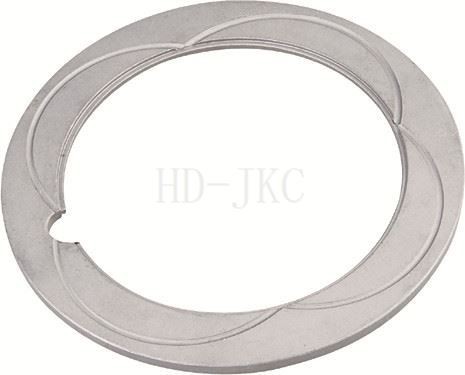
Another design consideration is the surface finish of the washer. A smooth surface finish can reduce friction and wear, while a rough surface finish can increase the risk of corrosion and damage. Therefore, the washer should be machined to a high surface finish to ensure optimal performance.
Compatibility with Other Components
When using trunnion washers in marine applications, it's important to ensure that they are compatible with other components in the system. This includes the trunnion shaft or pin, the housing, and any other mating surfaces.
The washer should be made of a material that is compatible with the other components to prevent galvanic corrosion, which can occur when two different metals are in contact with each other in the presence of an electrolyte, such as saltwater. In addition, the washer should be designed to fit properly with the other components to ensure proper alignment and load distribution.
Benefits of Using Trunnion Washers in Marine Applications
Despite the challenges presented by marine environments, there are several benefits to using trunnion washers in marine applications. These include:
Improved Load Distribution
Trunnion washers help to distribute loads evenly between the mating surfaces, reducing the stress on individual components and extending their lifespan. This is particularly important in marine applications, where the dynamic forces and stresses can be significant.
Reduced Friction and Wear
By reducing friction between the mating surfaces, trunnion washers can help to reduce wear and tear on the components, improving their performance and reliability. This can result in lower maintenance costs and longer service intervals.
Enhanced Alignment
Trunnion washers help to ensure proper alignment between the trunnion shaft or pin and the housing, which is essential for the smooth operation of the system. This can help to prevent premature failure of the components and improve the overall performance of the system.
Other Related Products for Marine Applications
In addition to trunnion washers, there are other related products that can be used in marine applications. These include Spring Bushing for Suspension Parts and Trunnion Shaft Bushing.
Spring bushings for suspension parts are designed to provide support and cushioning for the suspension system, reducing the impact of vibrations and shocks. They are commonly used in marine vessels to improve the ride quality and reduce the stress on the hull and other components.
Trunnion shaft bushings are used to support the trunnion shaft or pin, providing a smooth and low-friction surface for rotation. They are commonly used in marine applications to reduce wear and tear on the shaft and improve the overall performance of the system.
Conclusion
In conclusion, trunnion washers can be used in marine applications, provided that they are made of a suitable material, designed to withstand the dynamic forces and stresses encountered in marine operations, and compatible with other components in the system. By using trunnion washers in marine applications, you can improve load distribution, reduce friction and wear, and enhance alignment, resulting in improved performance and reliability of the system.
If you're interested in learning more about our Trunnion Washer products or have any questions about their suitability for marine applications, please don't hesitate to contact us. Our team of experts is always available to provide you with the information and support you need to make the right decision for your application.
References
- ASM Handbook, Volume 13A: Corrosion: Fundamentals, Testing, and Protection
- Marine Corrosion: Causes, Prevention, and Control by John D. Clayton
- Handbook of Corrosion Data, Second Edition by Bruce D. Craig


