


Are there different sizes of bushings? You bet there are! As a bushing supplier, I've seen it all when it comes to the wide variety of bushing sizes out there. In this blog, I'm gonna break down why these different sizes matter and how they play a crucial role in various applications.
First off, let's talk about what bushings are. For those who might not know, bushings are like the unsung heroes in many mechanical systems. They're basically cylindrical tubes that are used to reduce friction, absorb vibrations, and provide support between two parts that move relative to each other. Think of them as the smooth operators that keep things running without a hitch.
Now, why do we need different sizes of bushings? Well, it all boils down to the specific needs of different applications. Every machine or device has its own set of requirements, and the size of the bushing is a key factor in meeting those needs.
In the automotive industry, for example, the size of bushings can vary greatly. You've got small bushings that are used in things like the steering column. These need to be precise in size to ensure smooth and accurate steering. On the other hand, larger bushings are used in suspension systems. The Spring Bushing for Suspension Parts is a great example. These bushings have to be big enough to handle the heavy loads and constant movement that come with a vehicle's suspension. They help to absorb shocks and vibrations, making for a more comfortable ride.
In industrial machinery, the size differences are just as significant. Some machines have very tight spaces where only small bushings will fit. These might be used in delicate instruments or high - precision equipment. In contrast, large industrial presses or heavy - duty manufacturing equipment require massive bushings. These big boys need to be able to withstand huge amounts of pressure and wear.
Another area where size matters is in the aerospace industry. Aircraft components demand the highest level of precision and reliability. Bushings used in aircraft are often custom - sized to fit the unique design of the plane. They have to be lightweight yet strong enough to handle the extreme conditions of flight.
Let's take a closer look at some specific types of bushings and their size variations. The Trunnion Shaft Bushing is a type that's commonly used in heavy machinery and construction equipment. These bushings come in different sizes depending on the size of the trunnion shaft they're meant to fit. A larger shaft will require a bigger bushing to ensure a proper fit and smooth operation.
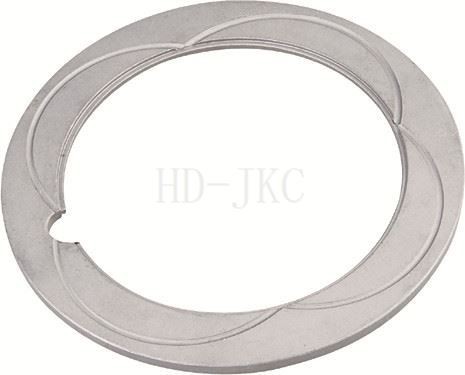
The Trunnion Washer is another related component. While it's not exactly a bushing, it often works in conjunction with bushings. Trunnion washers also come in various sizes to match the corresponding bushings and the overall design of the machinery.
When it comes to manufacturing bushings, getting the size right is no easy feat. We use advanced machining techniques and high - precision tools to ensure that each bushing meets the exact specifications. We start with high - quality raw materials and then carefully shape and finish them to the required size. Quality control is a big part of the process. We measure and inspect each bushing multiple times to make sure it's within the acceptable tolerance range.
But it's not just about the physical size. The internal diameter, external diameter, and length of the bushing all have to be carefully considered. The internal diameter needs to be a perfect fit for the shaft it's going to be used with. If it's too big, there'll be excessive play, which can lead to vibrations and premature wear. If it's too small, it might be difficult to install and could cause the shaft to bind.
The external diameter is also crucial. It has to fit snugly into the housing or the part where it's being installed. A proper fit here helps to distribute the load evenly and prevent any unwanted movement. The length of the bushing affects its load - bearing capacity and how well it can absorb vibrations.
As a bushing supplier, I know that choosing the right size of bushing can be a bit overwhelming for customers. That's why we offer expert advice and support. Our team of experienced engineers can help you determine the best size and type of bushing for your specific application. We understand that every project is unique, and we're committed to finding the perfect solution for you.
If you're in the market for bushings, whether it's for a small DIY project or a large - scale industrial application, don't hesitate to reach out. We've got a wide range of sizes and types in stock, and we can also manufacture custom - sized bushings to meet your exact requirements. Contact us today to start the conversation about your bushing needs. We're here to make sure you get the right product at the right price.

In conclusion, the answer to the question "Are there different sizes of bushings?" is a resounding yes. The variety of sizes is essential to meet the diverse needs of different industries and applications. Whether it's a tiny bushing in a watch or a massive one in a mining machine, each size plays a vital role in keeping things running smoothly. So, if you're looking for bushings, make sure you consider all the factors and choose the right size for your project.
References
- "Mechanical Design Handbook" by Robert C. Juvinall and Kurt M. Marshek
- "Automotive Suspension Design: Principles and Analysis" by David Crolla


